

Best Tooth Replacement Options
If you’re dealing with missing teeth in Bloomington, IL, you’re not alone, and you have more options available to you today than ever before. Understanding the best tooth replacement approaches requires looking at the full picture: how different solutions work, which ones hold up over time, and what each one means for your daily life and long-term oral health. The team at SoLo Dental covers every major tooth replacement option, from dental implants to partial dentures to full arch solutions, so you can approach your consultation with clarity and confidence. We’ll help you learn how each option works, who it’s best suited for, and what the experience typically involves.
Why Tooth Replacement Matters for Your Oral Health
Tooth loss is more than a cosmetic concern. When a tooth is lost, the surrounding teeth begin to shift toward the empty space over time. This gradual movement can alter your bite, create new areas where bacteria can trap, and contribute to additional tooth decay or gum disease. The jawbone beneath the missing tooth also loses stimulation it normally receives through chewing, which can lead to bone loss over months and years.
According to the American Dental Association, untreated tooth loss can have cascading effects on your overall oral health, including changes to jaw structure and the long-term stability of your remaining teeth. Replacing missing teeth promptly rather than waiting is one of the most important steps you can take to protect your existing natural teeth and the health of your jaw.
Why They Remain the Most Comprehensive Replacement Option
Dental implants have become the most widely recommended approach for replacing missing teeth because they address the problem at its root. An implant is a small titanium post placed into the jawbone, where it fuses with the bone through a process called osseointegration. Once that bond is established, a dental crown is attached to the implant, creating a prosthetic tooth that functions and feels remarkably close to a natural tooth.
How Dental Implants Work
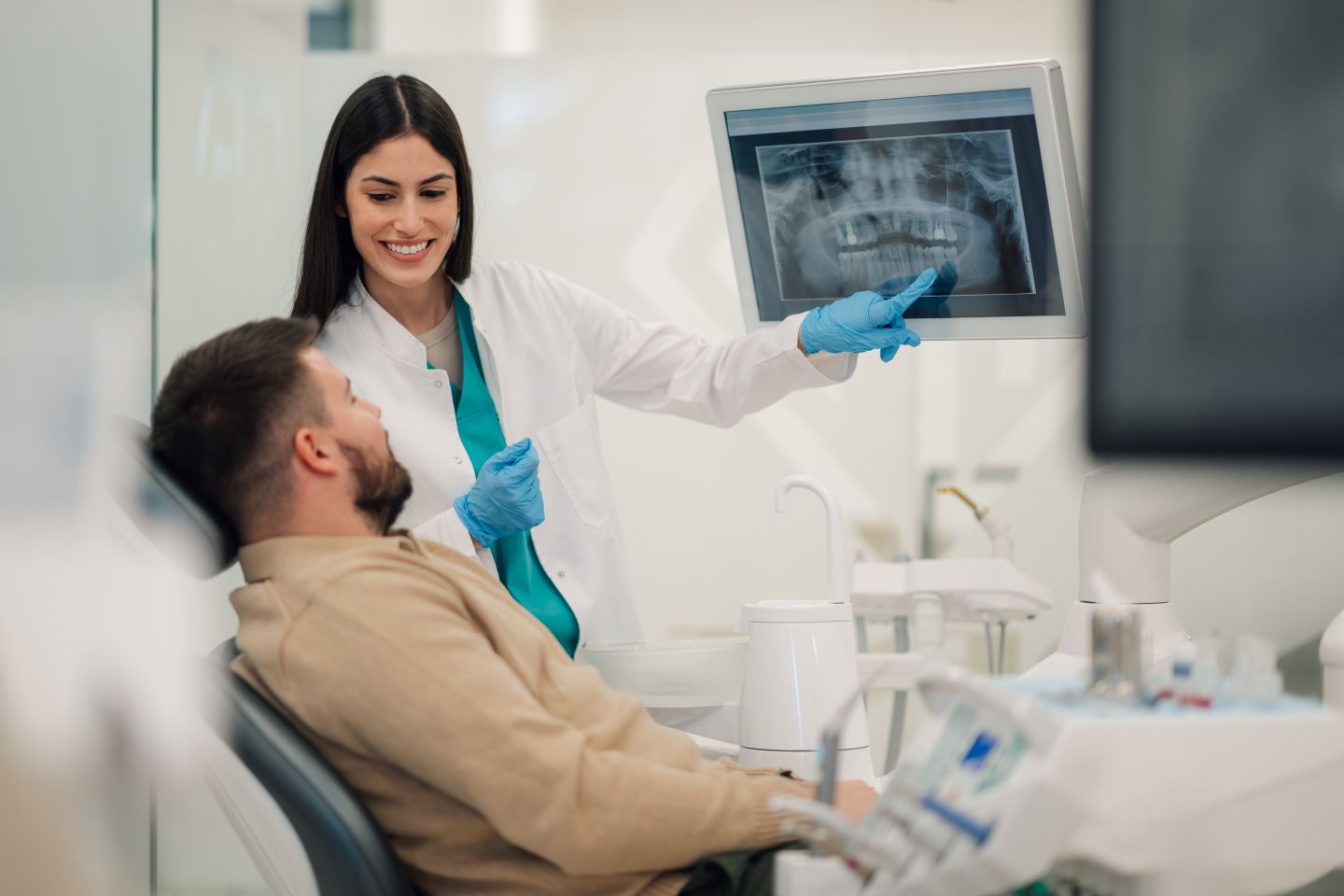
The implant placement process typically unfolds in stages. After an initial evaluation of your bone density, gum tissue health, and medical history, the implant post is surgically placed into the jaw. Healing takes several months, during which the implant integrates with the bone. A temporary prosthesis may be used during this period. Once healing is confirmed, the permanent dental crown is placed on an abutment that connects to the implant post.
If significant bone loss has occurred, bone grafting may be recommended before implant placement to ensure there’s enough healthy bone to support the implant. This additional step adds to the overall timeline but significantly improves the long-term outcome for patients who need it.
Why Implants Stand Apart From Other Options
Unlike a dental bridge or removable dentures, implants do not rely on adjacent teeth or surrounding teeth for support. A bridge requires preparing the abutment teeth on either side of the gap; healthy tooth structure is reduced to accommodate dental crowns that anchor the bridge. Implants avoid this by standing independently in the jaw. They also continue to stimulate the jawbone, helping to prevent the bone loss that typically follows tooth loss.
Mini Dental Implants
Mini dental implants are a narrower variation of traditional implants, sometimes used when bone volume is limited or when cost is a primary concern. They are less invasive but may not provide the same long-term stability as standard implants for all patients. Your provider can help determine whether mini dental implants are appropriate based on your specific bone structure and dental needs.
Dental Bridges
A dental bridge is a fixed prosthetic that spans the gap left by one or more missing teeth. Traditional fixed bridges consist of one or more artificial teeth anchored to dental crowns placed on the abutment teeth on either side of the space. Once cemented, a dental bridge is not removable and functions much like natural teeth.
When a Dental Bridge May Be Recommended
Bridges are often considered when a patient has healthy surrounding teeth that can support the bridge, when bone volume may not support implant placement without significant grafting, or when a more straightforward restoration timeline is preferred. An implant-supported bridge is another option: rather than using natural teeth as anchors, two or more implants support the bridge, preserving the surrounding teeth entirely while still avoiding individual implants for each missing tooth.
For patients replacing multiple teeth in a row, an implant bridge can offer a stable, long-term solution without requiring an implant for each tooth. This approach is particularly practical when the goal is to replace multiple missing teeth in a single arch segment.
Considerations for Dental Bridges
Traditional bridges require reducing the healthy structure of abutment teeth. Over time, the teeth beneath the crowns can become vulnerable to decay if proper care and consistent oral hygiene aren’t maintained. Bridges also don’t prevent bone loss beneath the gap the way implants do, since there’s no artificial root stimulating the jaw. These are important trade-offs to discuss with your provider when evaluating which tooth-replacement option best fits your situation.
Partial Dentures and Removable Options for Missing Teeth
Removable partial dentures have been used for decades as a cost-effective solution for replacing multiple missing teeth when implants or fixed bridges aren’t the right fit. A removable partial typically consists of a gum-colored acrylic base supporting one or more artificial teeth, held in place by metal or acrylic clasps that attach to remaining natural teeth.
How Removable Partial Dentures Work
Removable partial dentures are designed to be taken out for cleaning and while sleeping. They restore some chewing function and address the cosmetic impact of missing teeth, but they do not prevent bone loss and can feel less stable during chewing than fixed alternatives. Proper care of partial dentures is essential for maintaining both the appliance and the health of your remaining teeth and gum tissue.
Partial dentures are generally a less invasive and more accessible option initially. However, over time, changes in the jawbone and gum tissue can affect how well removable partial dentures fit, requiring periodic adjustments or replacement.
Implant-Supported Partial Options
For patients who prefer a removable appliance but want improved stability, implant-supported partial dentures use a small number of implants as anchors. This approach offers significantly better retention than conventional removable dentures while still allowing the appliance to be removed for cleaning. It can be a practical middle path for patients who aren’t candidates for full fixed restorations but want more security than standard removable dentures provide.
Full Arch Dental Implants and Solutions for Complete Tooth Loss
For patients facing complete tooth loss or who currently wear full dentures, full arch dental implants represent a significant advancement in tooth replacement. Traditional dentures rest on the gums and may use adhesive for stability, but they do not prevent bone loss and can become loose over time as the jaw changes shape.
How Full Arch Implant Solutions Work
Full arch dental implants anchor a complete set of permanent teeth to the jaw using a series of strategically placed implants. One well-established approach uses just four implants to support an entire arch of teeth; both the upper and lower arches can typically be treated this way. The result is a full set of permanent teeth that do not require removal and function with far greater stability than removable dentures.
Full mouth dental implants require a thorough evaluation of bone density, overall oral health, and medical history before treatment begins. Bone grafting may be needed in some cases. The process is more involved than single-tooth replacement, but for patients experiencing complete tooth loss, the functional and quality-of-life benefits are often meaningful.
Traditional Dentures vs. Implant-Supported Full Arch Solutions
Traditional dentures remain an option for patients who are not candidates for full arch implant solutions or for whom cost is a significant factor. Full dentures and removable dentures are generally less expensive upfront, but they come with ongoing considerations: refitting as the jaw changes, adhesive use, restrictions on certain foods, and continued jawbone loss beneath the appliance. An implant-supported full arch restoration addresses these limitations by anchoring the prosthesis and preserving the jaw structure.
Choosing the Best Tooth Replacement Option for Your Situation
There is no single best tooth replacement for every patient. The right choice depends on how many teeth are missing, the health of your jawbone and gum tissue, your overall medical history, your personal goals, and your long-term dental care plans:
Number and Location of Missing Teeth
Replacing a single tooth is a different clinical situation than replacing multiple missing teeth or an entire arch. A single implant with a dental crown is generally the most straightforward approach for one missing tooth. Options for replacing missing teeth across a broader area may include an implant-supported bridge, a removable partial denture, or a full-arch solution, depending on the extent of tooth loss and available bone.
Bone and Gum Tissue Health
Dental implant procedures require sufficient bone density for successful implant placement. Patients who have experienced significant bone loss may need bone grafting before implants are placed. Gum disease must also be addressed before any tooth replacement can begin, as active infection compromises both healing and the long-term success of any restoration. Your provider will assess your bone and gum tissue during your evaluation and discuss any preliminary treatment needed.
Long-Term Considerations and Proper Care
Every tooth replacement option requires proper care to perform well over time. Implants require regular brushing, flossing around the implant site, and routine dental care visits. Dental bridges require careful attention to the area beneath the pontic where it meets the gum. Partial dentures require daily cleaning and periodic professional assessment of fit. Understanding each option’s maintenance commitment is part of making a well-informed choice.
Why Choose SoLo Dental in Bloomington, IL
When it comes to replacing missing teeth, the experience and credentials of your provider make a meaningful difference. Whether you’re exploring dental implants for a single tooth, evaluating options to replace multiple missing teeth, or considering a full arch solution after years of living with dentures, our doctors at SoLo Dental approach every consultation with the thoroughness your situation deserves. A personalized treatment plan, advanced technology, and the depth of a prosthodontic background inform every recommendation made in our office.
Frequently Asked Questions About Tooth Replacement
How long do dental implants typically last?
With proper care and regular dental care visits, dental implants have a well-established long-term success rate. The implant post itself can last many years when maintained well, though the dental crown attached to the implant may eventually need replacement due to normal wear.
Am I a candidate for dental implants if I’ve already experienced bone loss?
Bone loss does not automatically disqualify you from dental implants. Bone grafting can often restore sufficient bone volume to support implant placement, though it extends the overall treatment timeline. A thorough evaluation is the best way to determine your candidacy. Some patients who aren’t candidates for traditional implants may be candidates for mini dental implants or implant-supported alternatives.
How much do tooth replacement options typically cost?
The investment in tooth replacement varies significantly depending on which option is right for you, how many teeth are involved, whether bone grafting is needed, and the complexity of your individual case. The most accurate way to understand the cost for your situation is through a consultation appointment where your provider can evaluate your specific dental needs and outline a detailed treatment plan.
Is it possible to get temporary teeth while waiting for permanent implants?
A temporary prosthesis is commonly used during the healing phase following implant placement, so patients do not go without teeth during this time. Temporary teeth allow you to maintain function and appearance while the implant integrates with the jawbone.
How soon after losing a tooth should I seek tooth replacement?
Bone loss begins fairly quickly after tooth loss, and the longer a space remains unfilled, the more the surrounding teeth may shift and the more challenging some restoration options may become. While it’s never too late to address missing teeth, an early consultation allows for more options and simpler treatment in many cases.
Taking the Next Step Toward a Healthier Smile
You now have a solid foundation for understanding the best tooth replacement options available today — from dental implants for a single missing tooth to full arch dental implants for more extensive tooth loss, along with bridges, partial dentures, and removable alternatives.
Each tooth replacement option has its place, and the right choice depends entirely on your unique oral health, goals, and circumstances. Replacing missing teeth in Bloomington, IL, is a decision that deserves specialist-level guidance and a genuinely personalized evaluation. To take the next steps with SoLo Dental, call us at (309) 663-6564 or schedule your consultation online. We look forward to helping you restore your smile with confidence.